


EXACT
Experiment for X-ray NAvigation, Characterization, and Timing
 Mission Overview
EXACT (Experiment for X-ray Navigation, Characterization and Timing) is a mission whose primary goal is to increase the technology readiness level (TRL) of a sensor payload used for autonomous, GPS-denied ranging and clock synchronization. The motivation for the project is the well-known vulnerabilities of GPS to jamming and interference. EXACT will make opportunistic use of X-ray signals emitted by pulsars to determine its range relative to a prescribed navigation origin and synchronize its clocks relative to some master clock.
SSEL's part in the mission is to design and build the detector. The design has similar architecture to the IMPRESS and EISSFLAIX detectors but takes into account lessons learned from both of those instruments. The instrument contains four scintilator crystals paired with silicon photomultipliers (SiPM). The crystals interact with the hard x-rays released by distant stars and produce violet and ultraviolet light that can be detected by the SiPMs.
The rest of the CubeSat is being designed and built by the University of Minnesota.
The instument will be hosted on a platform developed by Aegis Aerospace called "Space Test Program - Houston 12" (STP-H12). This spacecraft contains other expirements and will be mounted on the outside of the ISS.
Status
The EXACT instrument was delivered to the UMN team on May 19, 2026. It is currently undergoing testing by UMN to verify its operational capabilities while working in conjunction with their avionics.
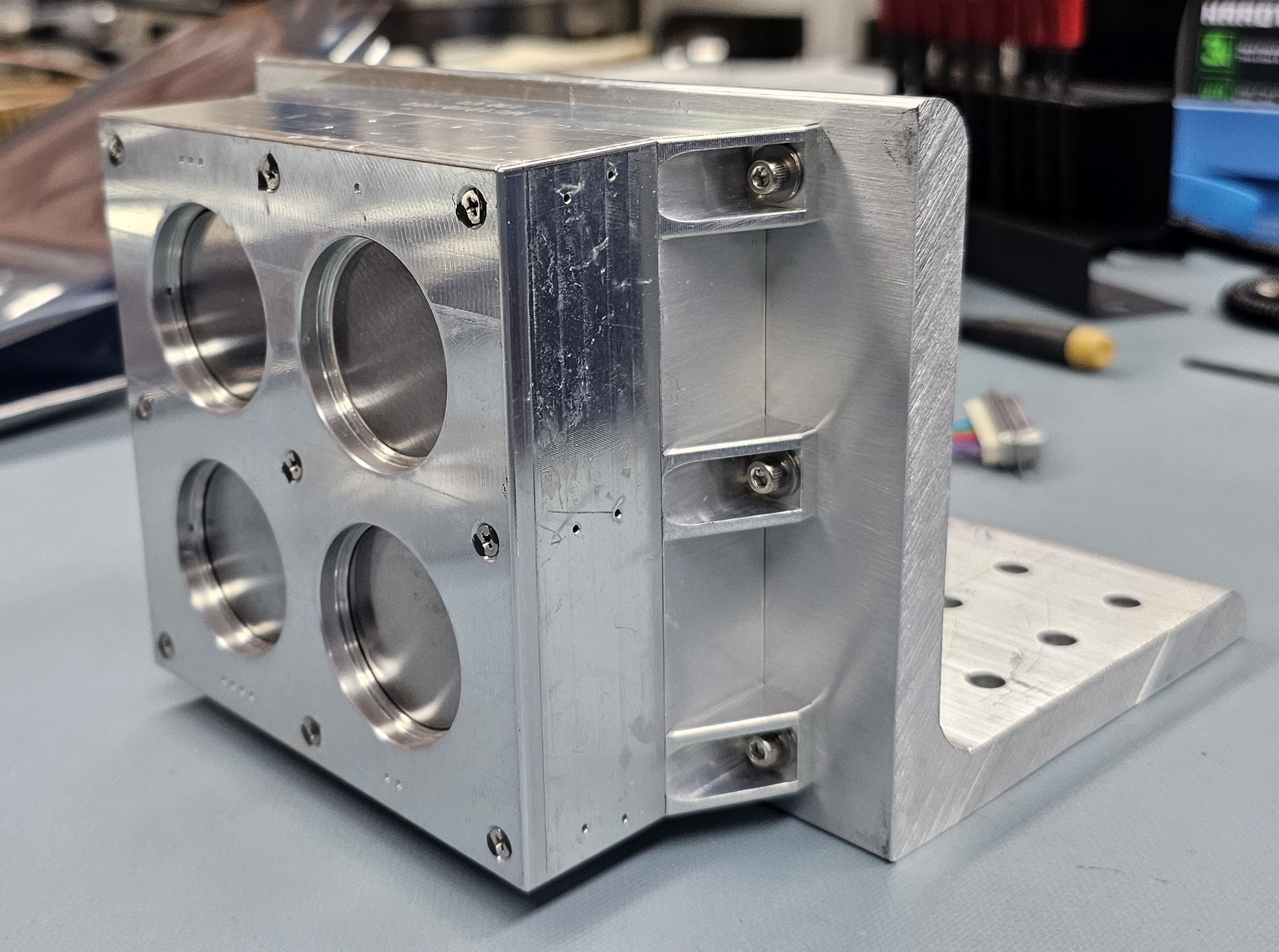
EXACT instrument