


RadPC-Lunar
Mission Overview
RadPC
RadPC is an edge computer that was developed by Dr. Brock LaMeres. Over the course of a decade, Dr. LaMeres and his team of graduate and undergraduate students developed a small computer capable of surviving and operating in the harsh radiation environment of space. Unlike modern space computers that make use of radiation harderend components, RadPC implements a unique redundancy scheme based around multiple FPGAs.
RadPC-Lunar
RadPC-Lunar was the mission where RadPC was selected to piggyback on a lunar lander. The small computer was to conduct both internally and externally induced faults that would trigger and test the redundancy functionality. The lunar lander, called Blue Ghost Mission 1 (BGM1), was designed by Firefly Aerospace. RadPC was one of ten experiments integrated to the lander, each of which doing their own science and technological demonstrations.
SSEL's part in the mission was to design and fabricate the structure surrounding RadPC as well as develop supporting and monitoring electronics. These electronics powered RadPC and relayed data back to BGM1. On the science-side, SSEL integrated radiation detectors to monitor when and how much radiation was striking RadPC.
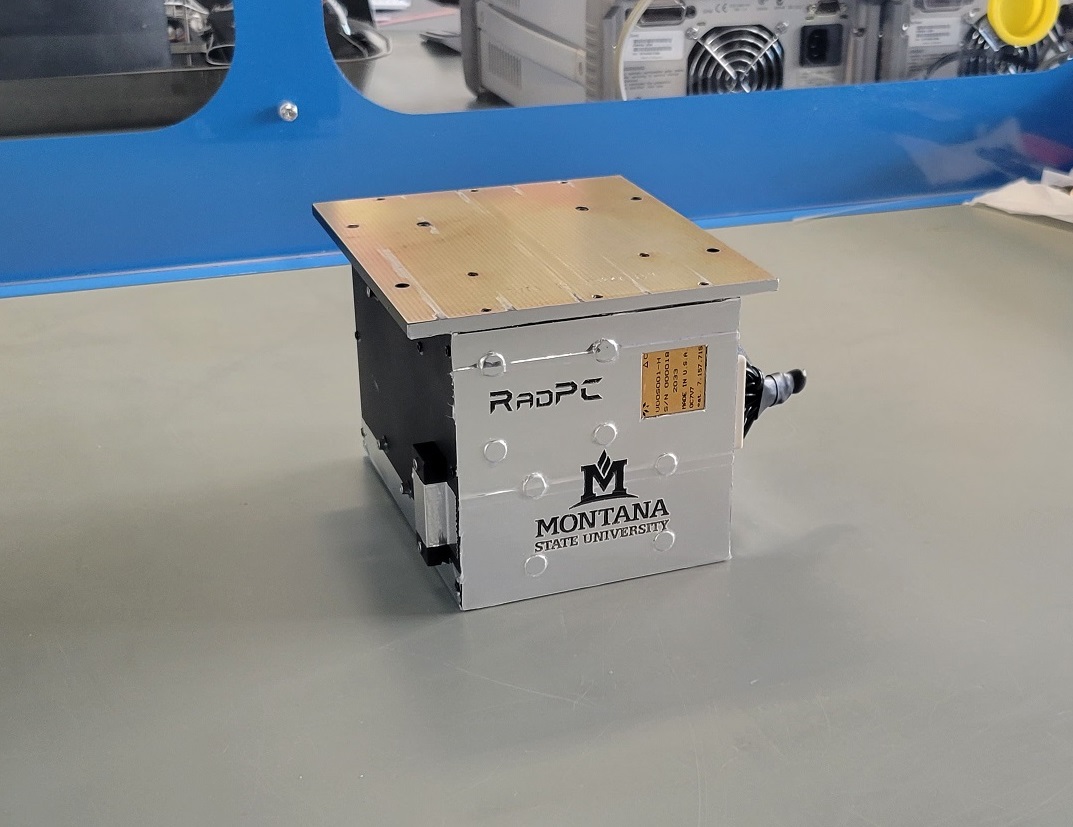
RadPC unit at time of delivery to FireFly Aerospace
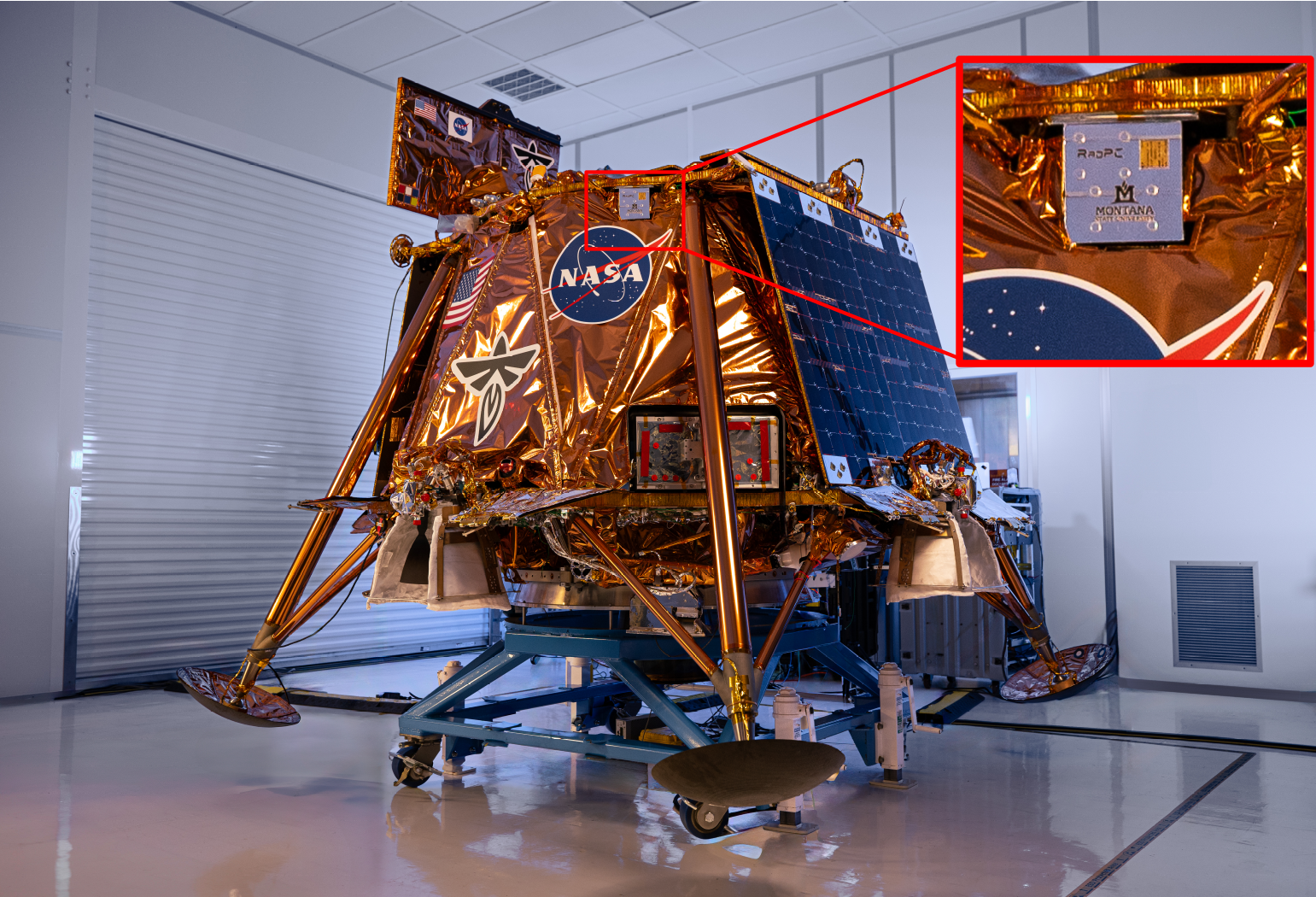
RadPC on the BGM1 lander before integration on the launch vehicle
Status
RadPC, mounted to the external structure of BGM1, was launched on January 15, 2025. MSU's payload was turned on not too long after the deployment of BGM1 and began collecting data about the radiation environemnt and the performance of RadPC. The radiation measurement capabilities of RadPC quickly became of interest to the rest of the BGM1 mission. Throughout the six-week journey to the Moon's surface, RadPC continued operating and collecting data.
BGM1 successfully landed on the moon on March 2, 2025. RadPC collected data on radiation levels and dealt with extreme temperature swings. Both RadPC and BGM1 continued operation for the next two weeks until they were on the dark side of moon. Neither survived the lunar night, though that was always the plan. RadPC is still on the lunar surface to this day, no longer operational but a reminder of the capabilities of MSU.
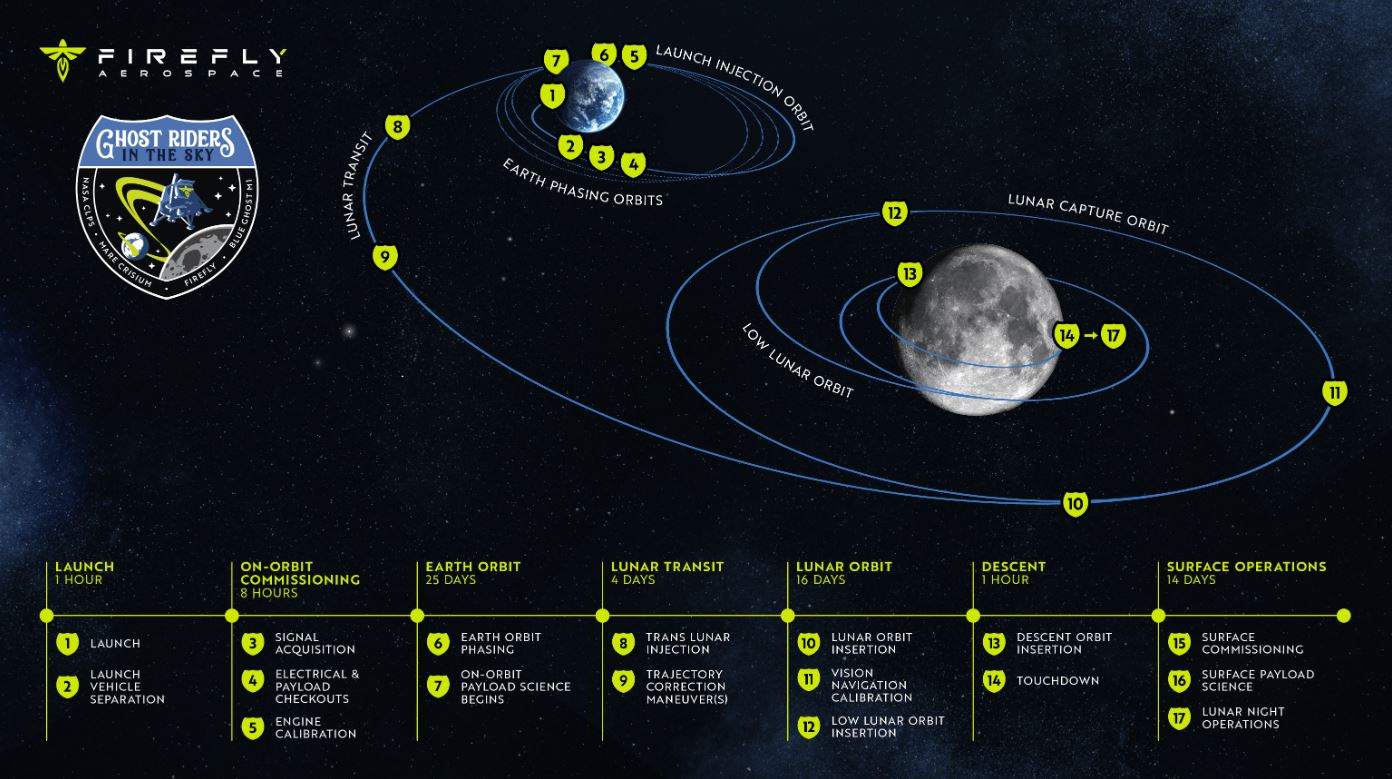
BGM1 trajectory from Earth to Moon